Providing Visibility of Supply Stock
Supply Chain analysts use the Supply Depot dashboard to easily track components by their unique identifiers such as national stock number and part number. Using this application, analysts can track the sites where components are located and identify managers to follow up with regarding questions about supply and repair details.
Prioritizing Maintenance Requirements
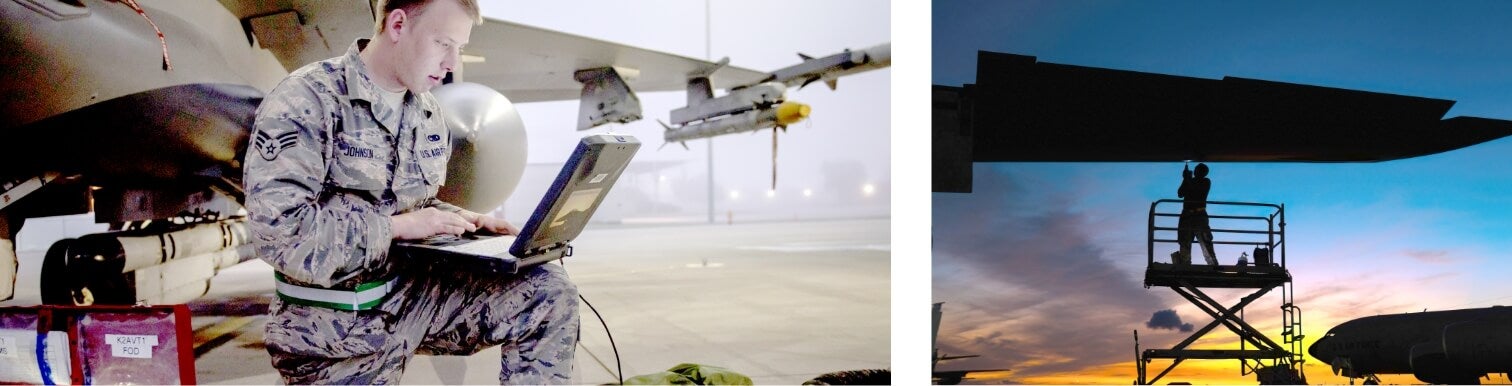
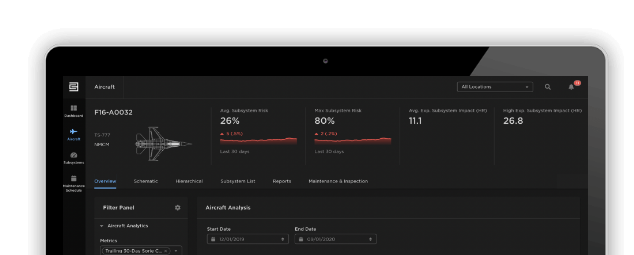
Maintenance planning teams rely on the PANDA toolkit to identify and prioritize part replacements during planned maintenance events. PANDA generates detailed CBM+ forecasts of remaining life for critical parts on active service aircraft. This helps maintenance planners understand which parts and on what aircraft need the most attention during maintenance events. PANDA ensures that maintenance analysts are always on top of the most urgent repairs with continuously updated watchlist items, reminders, and alerts.
Generating Long-Range Supply Forecasts
Maintenance managers also need parts available to replace components that have hit their useful life thresholds. PANDA helps supply chain analysts compare their planned parts inventory with the parts requirements generated by the CBM+ forecasts. Based on historical demand, useful life analysis, forecasted failure windows, and projected flight hours for the aircraft, supply chain analysts can create 5-year plans for component requirements. This ensures that the USAF carries the optimal number of parts to keep planes mission-capable.
Detecting Failure of Components
While historical maintenance data has proven useful in proactive maintenance and parts planning, sensor data allows planners and analysts to gain further insights into the current health of an aircraft. The RSO, working with C3 AI, has proven the value of sensor-based machine learning algorithms for select failure models of three aircraft platforms – the B-1B, C-5 and the KC-135. Using this approach, the RSO and C3 AI team have shown significant value in near real-time detection of degradation, unlocking previously hidden insights. The B-1B and C-5 have created a foundation for the rollout of sensor-based AI/ML algorithms to all USAF aircraft platforms, improving timely maintenance and mission capability rates.
Ensuring Secure Access
The PANDA toolkit is hosted within the Air Force’s Cloud One IL-5 (DoD Impact Level 5) environment allowing the application and its data to remain within government control. Moreover, the applications are web-based and Common Access Card (CAC) authenticated, ensuring reliable, secure, and yet convenient access to all of PANDA’s users.
The Future of Aircraft Maintenance for the U.S. Air Force
The RSO is committed to a vision of using technology and innovative solutions to improve mission readiness of the U.S. Air Force. While strong progress has been made in the creation and scaling of the PANDA toolkit, RSO has its eye on future capabilities including the use of more data sources for improved AI/ML model accuracy, generating Tail and Fleet Health assessments, and arming maintainers with actionable recommendations to implement repairs. As technology advances, the RSO will continue to play a pivotal role in ensuring the defense preparedness of the United States of America and its allies.



 C3 AI Readiness