Monitor, Report, and Accelerate ESG Performance With AI
Leverage AI to Operationalize ESG
C3 AI ESG enables companies to manage and improve their ESG (environmental, social, and governance) performance with advanced machine learning, natural language processing (NLP), and generative AI techniques. Customers can utilize C3 AI ESG to unify and store disparate ESG data as ESGbitsTM, automate reporting to standards, boost specificity and traceability of carbon emissions calculations, track stakeholder ESG priorities, and manage ESG plans with scenario analysis. The application leverages generative AI to draft reports and summarize changes in stakeholder sentiment and provides natural language search to rapidly access insights.
Benefits
Reduce
time and resources required for ESG reporting and GHG emissions calculation
Improve
accuracy and transparency of GHG emissions calculations and ESG performance data
Accelerate
ESG plans and goals in alignment with stakeholder priorities

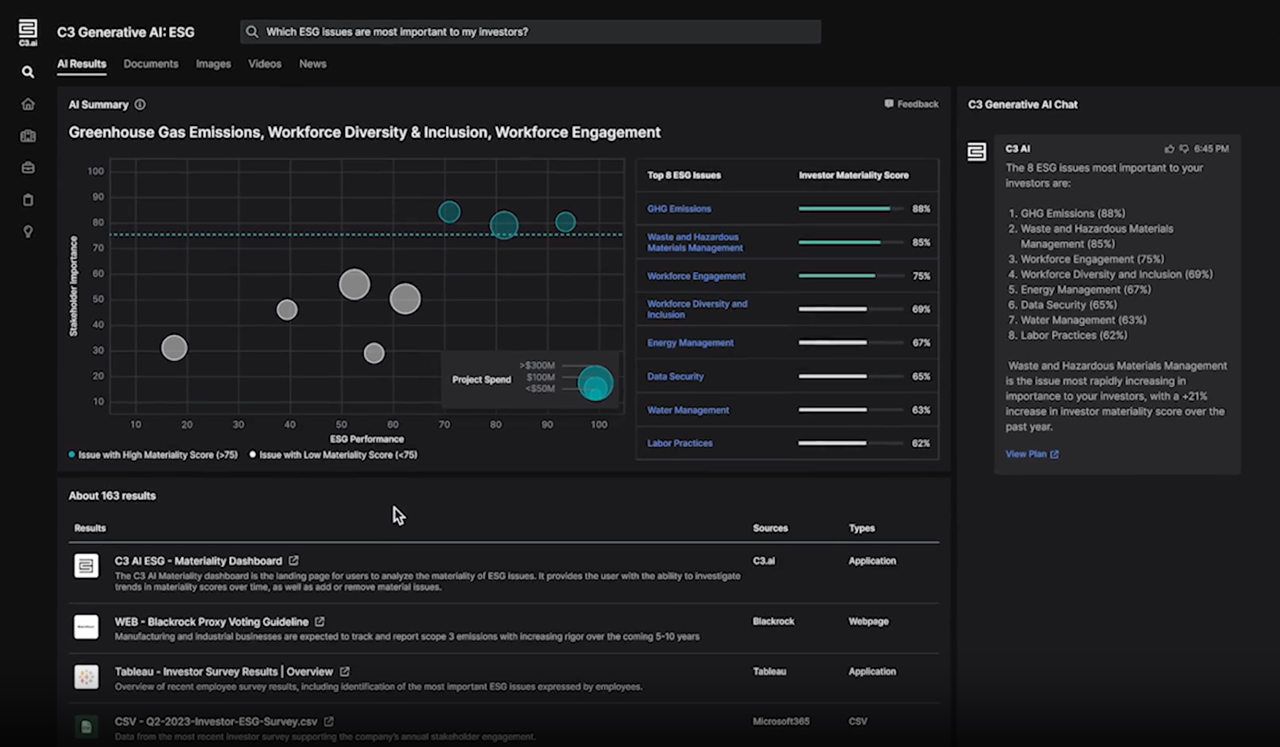
C3 Generative AI: ESG
Rapidly find critical ESG data and track ESG initiatives
Ask questions in natural language to quickly uncover relevant ESG insights and data. Leverage generative AI to draft reports and summarize changes in stakeholder sentiment. The C3 Generative AI Product Suite is available with C3 AI ESG and as a standalone capability deployable against customer datasets and applications.





AI-Based ESG Management
Error prone data management due to fragmented ESG data across systems

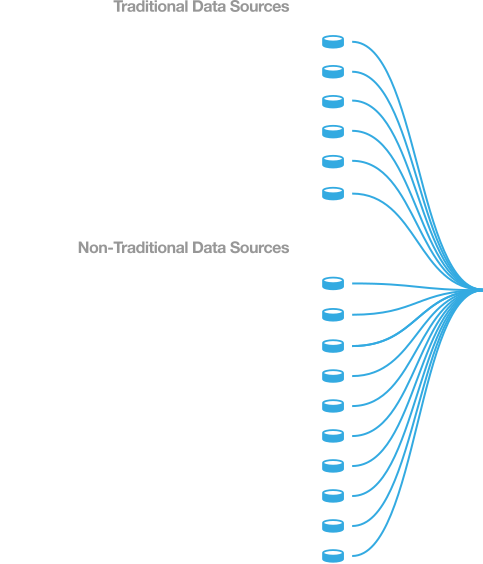
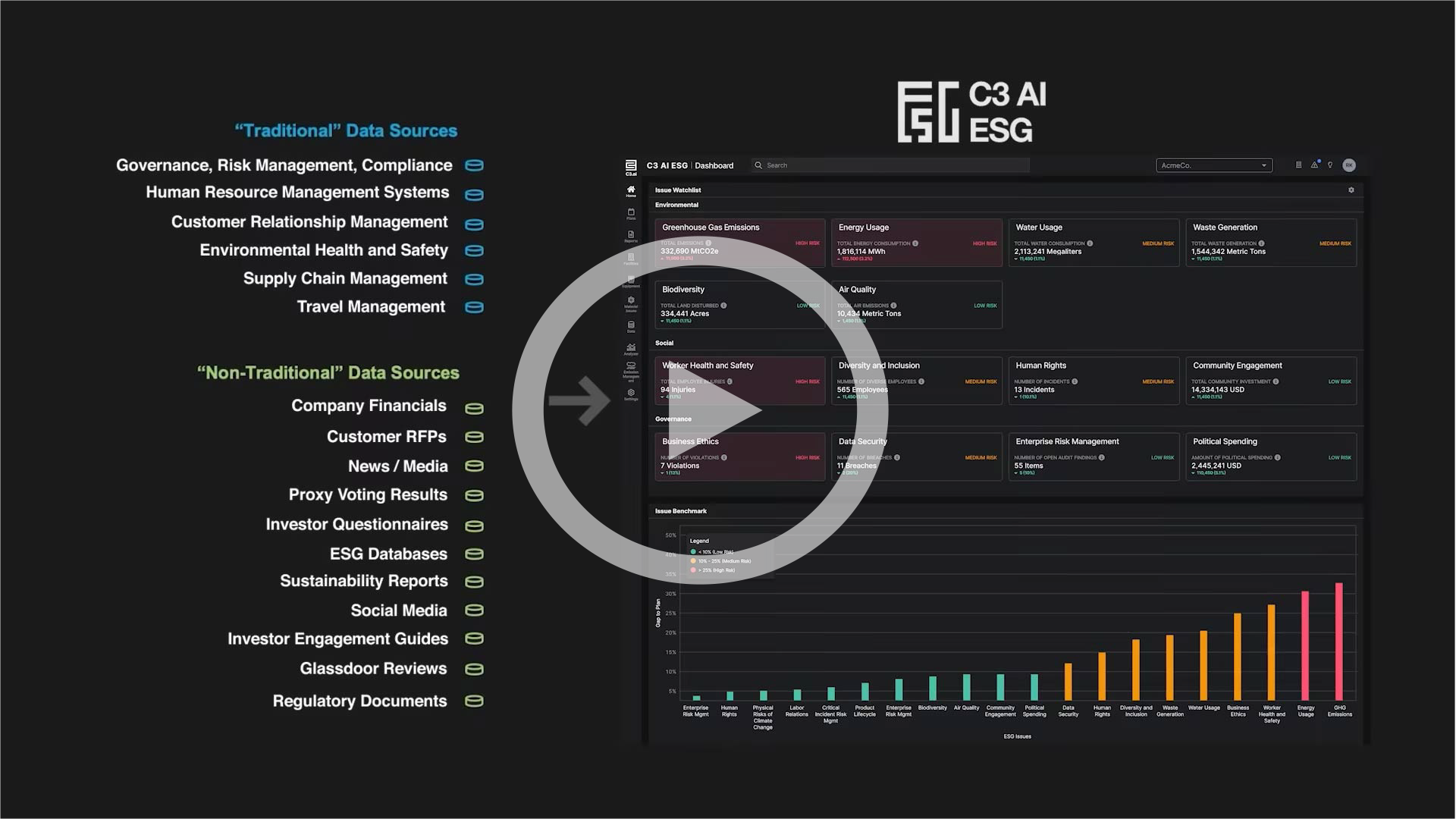
Unified ESG data across disparate enterprise systems as ESGbitsTM provides single source of truth and robust data lineage and auditability reduces compliance risk
Difficulty tracking priority ESG issues across critical stakeholders

AI-based stakeholder monitoring and generative AI summaries track perception in near real-time to surface key insights and reduce risk
Tedious process to perform GHG emissions calculations

Automated Scope 1, 2, and 3 emissions calculation according to the GHG Protocol including NLP-based fuzzy matching to select the appropriate emission factor
Inability to track progress against enterprise ESG goals

Goal setting and real-time tracking helps achieve enterprise ESG targets and generative AI-enabled search surfaces relevant progress insights
Difficulty keeping up with rapidly evolving reporting requirements

Native support for all major ESG reporting standards and generative AI drafting streamlines reporting across frameworks
Lack of data and process to determine strategy and mitigate risks to achieving ESG goals

Plan management and optimization workflows including marginal abatement cost curve facilitate centralized planning and risk management

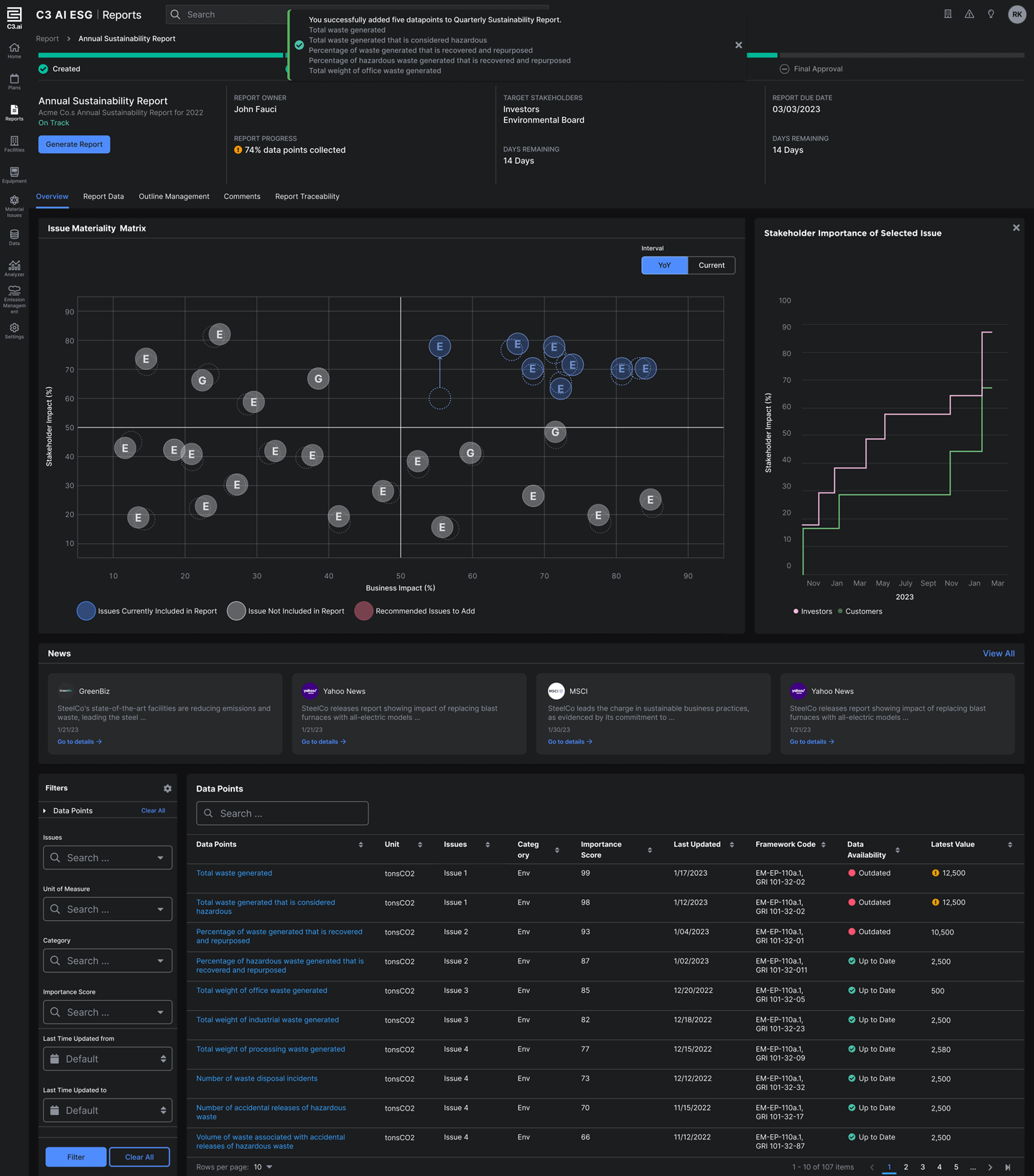
Automate ESG reporting and meet ESG goals
Key Capabilities

Native Support for All Major ESG Reporting Standards
Native Support for All Major ESG Reporting Standards
- Align reporting objectives to stakeholder needs using the NLP-based materiality assessment
- Automatically map available data to widely supported voluntary reporting frameworks
- Create generative AI-powered report drafts and track progress on data dependencies to ensure reports are issued on time

Unified ESG Data
Unified ESG Data
- Integrate across disparate enterprise systems to automatically ingest and unify data in a single platform
- Designate a single source of truth to holistically review and analyze ESG performance
- Generative AI-enabled search surfaces relevant ESG performance insights

Scope 1, 2, and 3 GHG Emissions Management
Scope 1, 2, and 3 GHG Emissions Management
- Automatically apply appropriate calculation methodology and map emission factor according to GHG protocol
- Move from averages to actuals with emissions maturity workflow to improve granularity of emissions data
- Pinpoint supplier hotspots and leverage intuitive workflows for seamless supplier emissions data requests and joint supplier projects

ESG Planning to Accelerate Commitments
ESG Planning to Accelerate Commitments
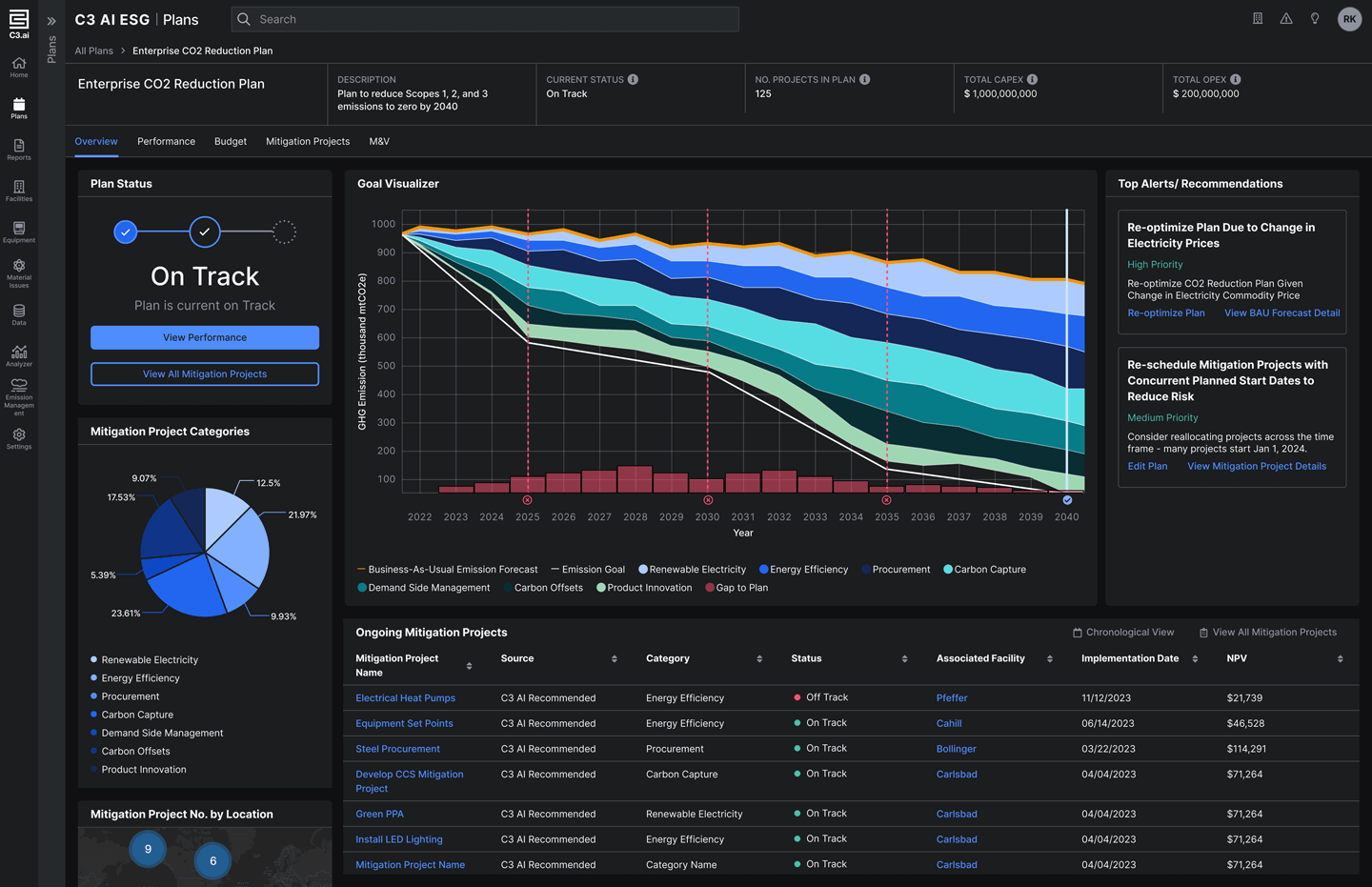
- Create and manage ESG plans with scenario analysis and marginal abatement cost curve to accelerate goals
- Define projects to improve ESG performance and map projects back to enterprise-wide initiatives
- Explore scenarios to select the most capital efficient ways to deliver performance improvements

AI-Based Stakeholder Monitoring
AI-Based Stakeholder Monitoring
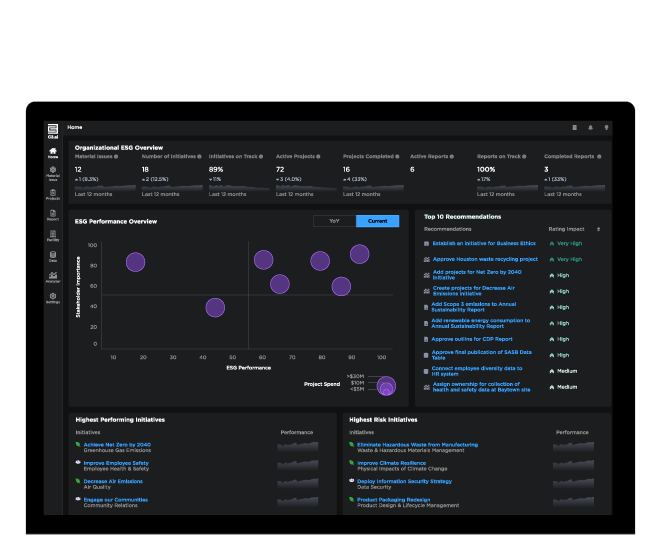
- Leverage Natural Language Processing (NLP) to identify the highest priority ESG issues for stakeholders as they emerge
- Inform sustainability strategy with ESG issue importance insights
- Manage stakeholders proactively using weekly generative AI-powered summaries of ESG issue importance insights

Goal Setting and Real-Time Tracking
Goal Setting and Real-Time Tracking
- Define quantitative performance goals and set time-based targets for priority ESG issues
- Track performance over time and leverage AI-driven recommendations to put initiatives back on track
Scope
C3 AI ESG can be deployed across a wide range of issues and industries, such as:
Industries
 Healthcare
Financials
Energy
Materials
Transportation
Technology
Consumer Goods
Manufacturing
Utilities
Others
Issues
Greenhouse Gas
Emissions
Water Management
Biodiversity
Human Rights
Employee Health and Safety
Diversity and Inclusion
Supply Chain
Physical Climate Risk
Business Ethics
Reporting Channels
Sustainability reports
Regulatory reports
Company websites
Questionnaires
Reporting databases
Benefits for ESG Professionals

Head of Sustainability / ESG
Define sustainability strategy, set goals, manage plans, and engage priority stakeholders effectively.

Finance Professionals
Identify investor ESG priorities, easily access relevant data with a generative AI-powered natural language search interface, and meet investor informational needs.

ESG Reporting Manager
Manage ESG data, prepare reports in accordance with various frameworks, leverage generative AI-powered draft disclosures, and respond to stakeholder requests for data.

Emissions Data Owner
Improve efficiency and specificity of Scope 1, 2, and 3 carbon accounting and identify key hotspots and opportunities to engage with suppliers.
Data Sources